
The emancipation trap
From the slavery of patriarchy to the one of consumerism, liberation needs to get inspiration from different paths

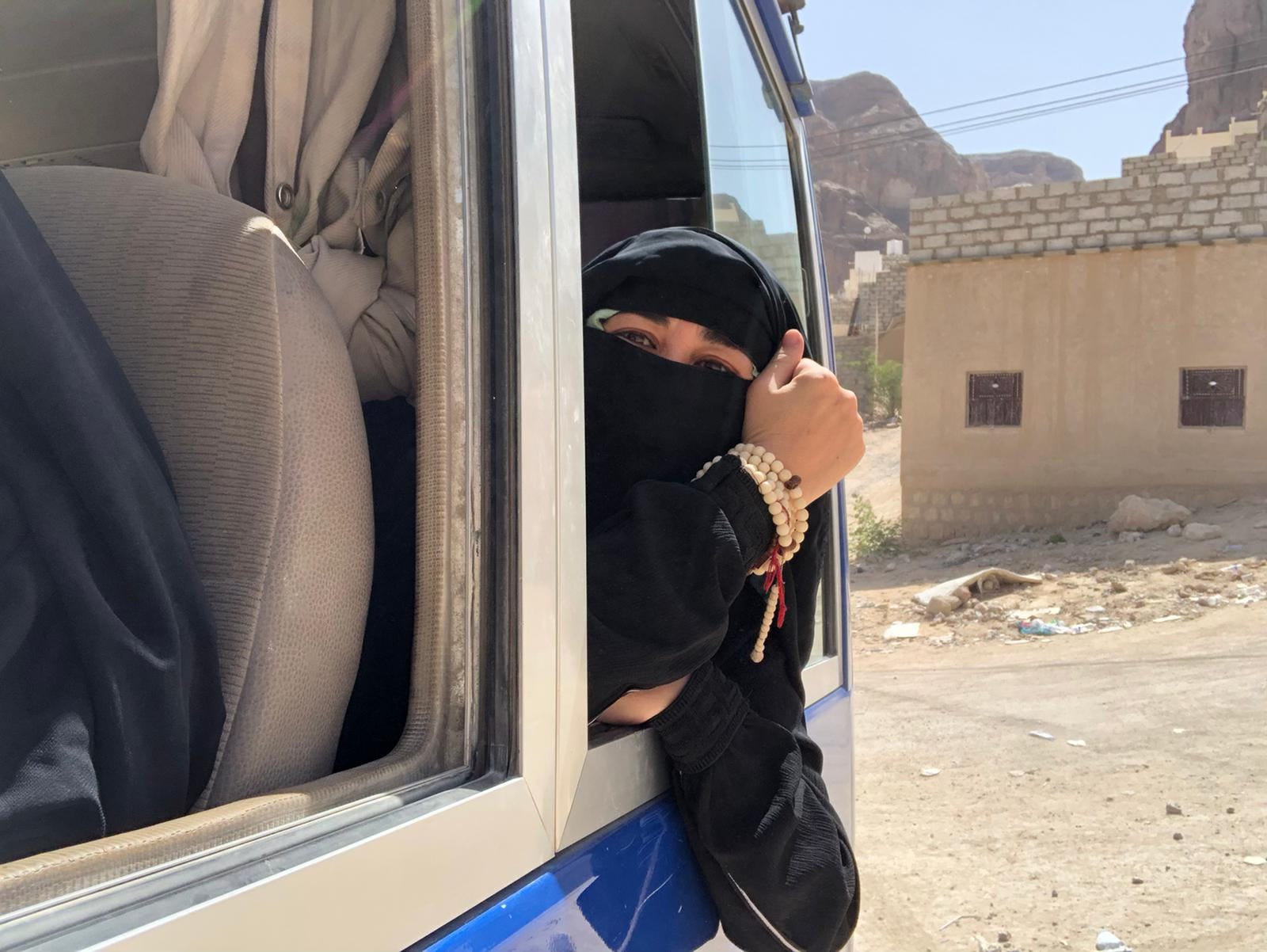
The desert heat doesn’t make you sweat. Instead, it burns inside, especially when you wear a long heavy, synthetic abaya. I used to wear one at least once a week when we had to leave the madrassa where I studied to attend lectures outside our buildings.
We were in Hadramout, a region in southern Yemen, the land of pious as it is known in the Muslim world. “I wanted to live like in the time of the sahaba (the companions of the Prophet Mohammed) – a teacher explained to me.
I could feel her, and I hope you will too.
Islamic, and traditional society in general, are either considered backward or romanticized, rarely observed for what they actually are: a net of practices moved by wisdom and harmony, not subjected to time and needs.
To some, the heaviness of a three-layer niqab under the heat might be perceived as suffocating; but to others is the demands of fashion and social appearance the real cage. The Nacirema Essay, a classic of anthropology literature, proves well how in the ends, it is all a matter of perception, and how it is narrated.
What you don't see doesn't mean it doesn’t exist
The opportunity to live in an environment detached from modernity was enlightening for me. Being covered from head to toe helped me to reconnected to my inner womanhood, and allowed me to switch my attention on what I am, rather than how people perceive me.
My daily beauty routine was a tiny mirror, homemade face cream, natural khol and random masks of coffee grains and lemon. My wardrobe had 4 or 5 long dresses and an abaya for going out. Free from worrying about trivial things such as how to dress and how people would think of me, I spent a large part of my time focusing on contemplation, and writings.
I felt radiant.
I rediscovered the power of concentration, I could sit for hours without the need of checking anything else around me. It was a practice quite common in the ancient world till the era of multitasking practically banned it as “slackers activity.”1
I realised how much my perception had changed when a group of Western women came to stay in the Madrassa for a few weeks. Their eyebrowns, hair, even gaze carried the aesthetics diktat of the modern world. Beauty, Isabella Rossellini said in an interview, is a matter of expression. And to express ourself we need to be free from external conditioning.
That is why, I believe, it was segregation, modesty, and a basic lifestyle that allowed me to truly free myself. Isolated from all, I feel connected as never before. It wasn’t just a personal perception. I read a cloister nun said in one of their rare book interview:
we don’t live of seclusion, but contemplation (..) life in the monastery help us to be woman in the world, and to the world2.
This form of womanhood, however, are always more often looked at condescendingly, and rarely valued as meaningful choices.
Liberating society by declaring war on motherhood
My experience in eastern traditional societies helped me to see the reality of lifestyle different from what now seems the only norm. It enhanced my believes that woman emancipation had been a very westernise journey, strictly connected to escaping the slavery of working class labour, and the “problem that has no name” of the bourgeoisie life style.
Those thoughts mature clearer when I become a mum. The words of Ali Izbegovic, the Islamic intellectual and former Bosnia president, resonate in my mind3:
It was a civilization that proclaimed motherhood to be slavery and promised to free woman from it
I felt it every day. In a society where some people put their little dog in a bag, me baby-wearing caused constantly discomfort and enquires, although it was a practice diffuse also in the west before the advent of consumerism - thus strollers.
Even not sending the baby to the nursery is generally perceived as reactionary, or worst, an act of arrogance. Daily care was established as necessity, but now is largely considered good social practice.
In Italy, where I come from, a blind trust in scientific and economic progress was signed the end of traditional practices on motherhood, and a drastic change on our perception of womanhood.
Rural women, distinguished for their strong dialect and naïveness, would have found in work a means to emancipate themselves, but it become also a way to normalise the separation from new born babies from their mums.
Any objections to those new trends were dismissed as illogical chain of belief that would have tied Italian society to a pre-industrial, savagery way of living. It was a rush to prove to ourselves – and others – that we belong to the developed and modern world that forced us to change without carefully ponder possible spill-over effects.
The main narrative was simple: in a civil society, institutions and scientific methodology could raise children better than their – most likely – uneducated or unprepared mum4.
That, indeed, is not the case.
Anthropologist Jean Liedloff explains well how tendencies toward self-hate and self-doubt are diffuse in modern societies largely because of this early separation in the first years of life5. As a paediatrician posed to me: there is no more time from breastfeeding. The rights of the baby remain unheard, and beyond the “freedom of choice” there is usually lack of information, and marketing needs.
As a woman, I never ever thought how essential is to cover these topics for our emancipation struggle. The motherhood experience is usually detached for young woman from its true political meaning, and simply regarded as a passage that led to a hit of personal self realisation or by contrary the end of freedom.
Indeed, neither is true. It is very clear for islamic and traditional society. Not for the so consider “civilised” world, aka private market. Public campaign, often led by governments, made us believe that a woman really gave contribution only if is part of the productivity system.
In reality, woman workforce collide just by accident with the rightful quest of woman liberation, and the majority of us have boring, dead-ending jobs, that have little to do with self-realisation.
It said though, that kids are expensive. Nothing is farer from the truth. The need of formula, baby aliments, and other useless -when not damaging -products sold as essential, life-saving to a generation of women seeking for truthful allies while breaking with an oppressive past, but found only marketed books and professionals interested more in sails than well-being.
The push against patriarchy is been reduced to nothing but a kick into consumerism.
Rather than free themselves, women in Western society have been detached from any inner and natural aspect of womanhood, which had devastating consequences on how we nurture our child, which one day will become the people who form the world.
Our existence was built around profit, not people. Kids are took care in dedicated spaces, and they are not part of the adult world anymore, which is always busy doing something. When you go east, on contrary, kids are everywhere.
In Yemen, almost all my Arabic teachers used to bring their babies to school, and young mum attends regularly all the activities of the madrassa. Men might have been excluded from our world, but our world was at measure of baby, and women of all kinds.
It was possible because toddlers were usually calm, self-aware enough to not be guided, or entertained constantly. They crawl around the room under the seemingly nonchalant supervision of their mum, who would carry out a lecture on Arabic grammar brilliantly and not interrupting herself continuously to shout some kind of commands.
Everything seemed possible, simply because it was in harmony with our natural rhythm.
It is not a matter of culture. The very Italian, and European, Maria Montessori considered mandatory to create environment at measure of children, and make them part of the adult world instead of making toy copy for them.
Despite being acclaimed widely, however, Montessori’s legacy in the westernized world has become nothing but a fancy brand for expensive childcare. Everyone likes wooden toys and large garden, but radically changing a lifestyle is a big no for most.
Afghanistan - and some others - continue to resist!
Back in the 70s, the Italian intellectual Pier Paolo Pasolini warned of the upcoming dilemma of woman leaving the family space:
From the moment a woman moves toward independence, all humanity deteriorated, as the institutions of modern society have no interest in nurturing men, only consumers.
It should be not surprising then if traditional societies in the Middle East and South Asia sense this very unresolved issue, and activate forms of resistances to the international gender agenda, that instead pushed intensively for reform, often using economy or internal societal fractures as tool for blackmails.
When I was in Afghanistan during the Western-backed republic of President Ghani, I worked for a research organization that monitored the government implementation of Woman, Peace, and Security UN resolution 1325.
The resolution taken in 2000 links gender equality to the maintenance of international peace and security, and it is an enormous effort to push governments around the world to implement the inclusion of women in the public domain, from the military to the civilian sector. Sadly, it was all reduced to a matter of numbers: number of women in police, the number of women in local council and so on.
What was generally pushed though, was the idea that a woman in a suit and with a lousy headscarf is more emancipated than a woman that covers up. The result was to exclude from social activities much of the women who refuse to engage in that narrative, and leave alone without social parameters to whom refer the women who instead believe in that.
Afghan women, despite the constant denigrating rhetoric, are not the invisible, passive bodies the West liked to describe. Even in traditional settings, more than one family lives in a compound which works as a small community with daily assigned tasks and duties.
I met many of them who author books, covering various topics, from natural herbal medicine to short novels. I heard some have the habit of visiting neighbors to borrow books on legal matters related to family issues, or biographies of scholars or women from the prophetic time.
In Yemen, I found a similar environment. The madrassa where I studied, was a hub of knowledge, open to different generations of women. Same I heard is the traditional Mahdara, the desert-based educational institutions of Mauritania.
In my experiences, the traditional educational system, usually belittle by foreign observers for their curricula and different teaching methods, produce way more educated and intellectual engaged woman that the average school system of western society.
It doesn’t produce profitable knowledge, though. and perhaps, this is the real reason of its criticism.
While denigrating segregated society and their way to limit a woman work environment, we forgot that education foremost has the purpose of personal growth rather than professional purpose6.
The ultimate revolutionary act
I found baffling how in light of this, the modern world keeps imposing abroad a model of emancipation that has actually proven a receipt for social disaster7.
Any legitimate doubts about the role of women in modern society are nowadays either simplified as backward and silenced or considered a violation of women's (and human) rights even in proven doubious by the very own western intellighentia.
During my trip to the rural eastern provinces of Afghanistan, families, women an men alike, always expressed mistrust and vocal resistance to anything that seemed an imposition of the international gender agenda: “ They want to weakness us”, I was often told.
At first I politely dismissed these voices as conspiracy. But now I feel it, and I know that a large vast of western literature too support their skepticism.
Family planning, vaccination, women and LGBTQ rights have been used in many poor countries as form of exploitation rather than a tool to improve health and lifestyle condition. It is then not surprising the reaction of extremist organizations such as the Taliban, which are perpetuating stubborn and extremely harsh policies against woman education.
I believe it has more to do with figuratively slammed the door to any appeal of the international community, which demands without ever listening. In times of fear, people tend to shield themselves. And to actually break the line require to acknowledge first all forms of violence. For instance, the one that for 20 years, the US led coalition along with international organizations used against Afghanistan to destroy and then reshaped society as they pleased.
Progress too can be a sign of social regression, and despite global economy tend to annihilate all form of societies, the hubs of resistance still pulsing need to be heard and emerge from the underneath of modern storytelling.
Our society has become so sofisticate that reduce the debate to emancipation or defeat patriarchy, is nothing but a trap. We need to address the various form of oppression we want to emancipate from, and learn to observe, humbling, existing strategies of resistance, especially those that challenge our very forma mentis.
It is a sad reality that many believe they need work or an organised social life to fill their time, which otherwise wouldn’t know how to use it. Interesting reading on this: Daniel Mothé, Utopia del tempo libero (1998)
Voci dal chiostro, Monache di clausura raccontano, Pasquale Maffeo
Islam between East and the West, Alija Izetbegovic
The narcissist society, Christopher Lasch
The continuum Concept, Jean Liedloff
Anche lo studio è un mestiere, Antonio Gramsci
The abolition of men, C. S. Lewis
"Islamic, and traditional society in general, are either considered backward or romanticized, rarely observed for what they actually are: a net of practices moved by wisdom and harmony, not subjected to time and needs."
Beautifully and accurately defined!
Loved this piece!
A great article! masha Allah